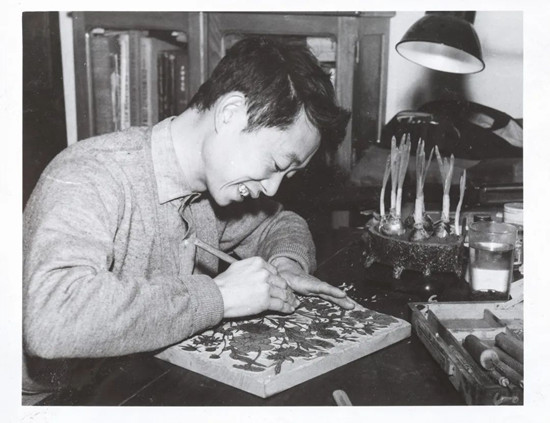
Huang Yongyu
Introduction
Huang Yongyu (1924-2023) was a prolific and highly regarded Chinese artist whose work spanned various mediums, including woodcuts, ink paintings, poetry, essays, novels, and even postage stamp design. Born in 1924 in Changde county, Hunan province, Huang was recognized as a legendary figure in Chinese art and design, achieving fame both in China and internationally. Despite lacking formal education, he taught himself to paint and write, utilizing his innate talent and hard work to become one of the most prominent artists of the 20th century in China. His artistic endeavors were characterized by versatility and creativity, and his contributions to Chinese art are commemorated through exhibitions and continued admiration of his work.
Early Life
Due to financial difficulties, Huang was compelled to leave school at a young age. At the age of 14, he left his hometown to travel around China, seeking employment opportunities to support himself. This early period of his life was marked by an array of jobs that included working at ceramic workshops, teaching in primary schools, designing theater props, and illustrating magazines. These diverse experiences provided him with the opportunity to refine his artistic skills and laid the foundation for his future career as an artist.
Artistic Career
Early Works
Huang Yongyu began his artistic career at a young age, creating woodcut prints and paintings that expressed his observations of life and the world around him. His early works showcased his ability to infuse humor, sensibility, and honesty into his art. Despite the labor-intensive nature of woodcut printmaking, he developed a passion for this medium, which he pursued throughout his life. His woodcuts often depicted everyday scenes and people, reflecting his keen understanding of human nature and society.
Major Works
Huang is perhaps best known for his work on postage stamps, particularly the Golden Monkey Stamp issued in 1980 to celebrate the Year of the Monkey. This stamp became highly sought after and remains an iconic piece of his legacy. Another notable work is his series of zodiac paintings, created annually from 2006 to 2017, which captured the vibrancy and cultural significance of each Chinese zodiac animal. His woodcuts, such as those in the Ashima series, illustrate traditional folk tales and showcase his ability to narrate stories visually.
Style and Techniques
Huang Yongyu's art is characterized by an animated palette, bold brush strokes, and a distinctive blend of illustration, caricature, and Chinese folk arts. His ink paintings often display a primitive beauty, while his woodcuts are celebrated for their intricate details and storytelling ability. Huang's work is infused with humor and wit, reflecting his perspective on life and his cultural heritage. Despite the simplicity of the woodcut medium, his prints convey a depth of emotion and insight, making them widely appreciated by both art critics and the general public.
Teaching and Influence
Huang's reputation as a skilled artist and teacher earned him recognition from prominent figures such as Xu Beihong, who invited him to serve as a professor at the Central Academy of Fine Arts in Beijing in the late 1950s. His influence extended beyond his students, as his works and artistic philosophy inspired generations of artists in China and abroad. Huang's dedication to his craft and his ability to blend traditional and contemporary elements in his art made a lasting impact on the world of Chinese art.
Recognition and Awards
Throughout his lifetime, Huang Yongyu received numerous accolades for his contributions to the arts. He served as the director of the department of print-making at the Central Academy of Fine Arts and was the vice chairman of the China Artists Association. His works have been exhibited extensively, both domestically and internationally, and continue to be celebrated for their artistic significance. His achievements in the arts have garnered him a reputation as a pioneer in the reform of Chinese painting, solidifying his legacy as one of China's most influential artists.








